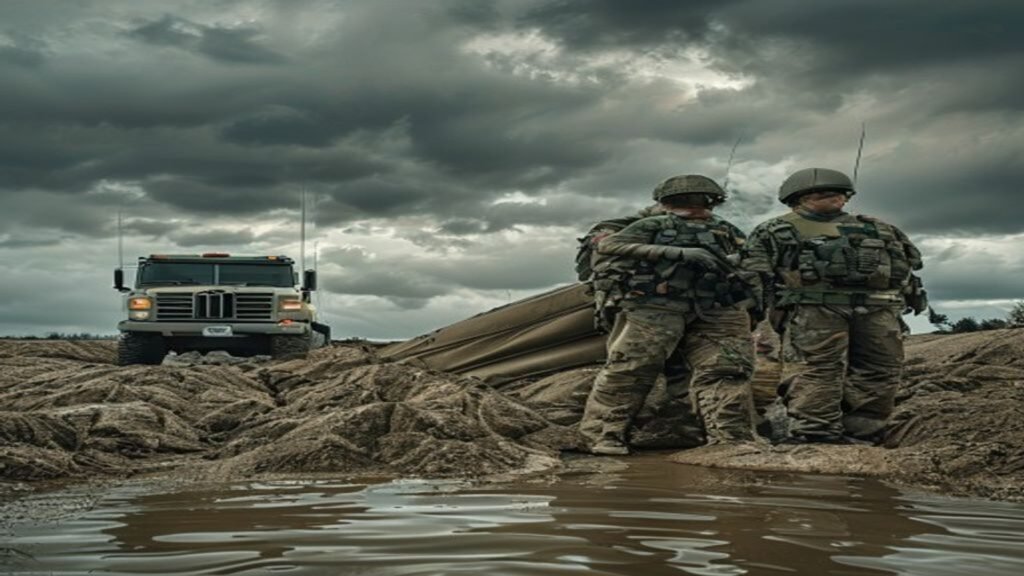
When a hurricane drowns a Gulf Coast town, when wildfire smoke turns a western sky orange, when floodwaters swallow an Appalachian valley — the first uniforms most Americans see belong not to the active-duty military but to the National Guard. Over the past two decades, the Guard’s domestic mission has expanded from occasional emergency muscle into something closer to a standing national disaster force, and the shift is reshaping the institution, its soldiers, and the states that depend on it.
A Force Built for Two Masters
The Guard’s defining feature is its dual identity: state governors command their Guard units for domestic emergencies, while the president can federalize the same troops for overseas missions. That flexibility has made the Guard the default answer to almost every domestic crisis. In a typical year, Guard members now log millions of duty days on domestic operations — hurricane response, wildfire suppression support, flood rescues, winter storm logistics, border missions, and civil support — a tempo that veteran officers describe as historically unprecedented outside of wartime.
The Climate Factor
Disaster frequency is the engine of the expansion. Billion-dollar weather disasters, tracked by federal climate agencies, have climbed from a handful per year in the 1980s to routinely more than twenty annually. Fire seasons have become fire years in the West, prompting several states to build standing Guard fire crews and aviation units that once would have been assembled ad hoc. Hurricane deployments that once lasted days now stretch to weeks of search, rescue, and recovery logistics. For governors, the Guard has become the indispensable first phone call — trained, local, and legally nimble in ways federal troops are not.
The New Missions Nobody Predicted
The Guard’s portfolio has also grown in less visible directions. Cyber units in dozens of states now help county governments and small utilities recover from ransomware attacks — a mission that barely existed fifteen years ago. Guard intelligence and communications specialists support responses to everything from pipeline disruptions to election-security monitoring. And the Guard’s State Partnership Program quietly pairs American states with partner nations’ militaries, making weekend soldiers into instruments of foreign policy.
The Strain on Citizen-Soldiers
The cost of being everywhere is borne by people with civilian lives. Guard members — teachers, nurses, mechanics, small-business owners — juggle employers and families around activations that arrive with little warning. Retention surveys flag operational tempo as a persistent concern, and advocates have pushed to close benefits gaps between state active duty and federal orders, where pay and health coverage can differ for identical work. Recruiting, after several difficult years across the entire military, has stabilized but remains competitive, with states dangling tuition programs and bonuses.
The Debate Over What the Guard Should Be
The expansion has triggered a quiet policy debate. Some defense thinkers argue for formally recognizing domestic disaster response as a core Guard mission with dedicated funding and equipment — high-water vehicles, aviation, communications — rather than treating it as a side duty of a combat reserve. Others warn against drifting too far from the warfighting role that justifies the Guard’s military structure. Governors, for their part, mostly want both: a force ready for the next deployment and the next flood alike.
What is not in dispute is the trajectory. As disasters grow costlier and more frequent, the men and women who answer with sandbags on Saturday and spreadsheets on Monday have become one of America’s most quietly essential institutions — the emergency service the country never quite planned, but cannot do without.