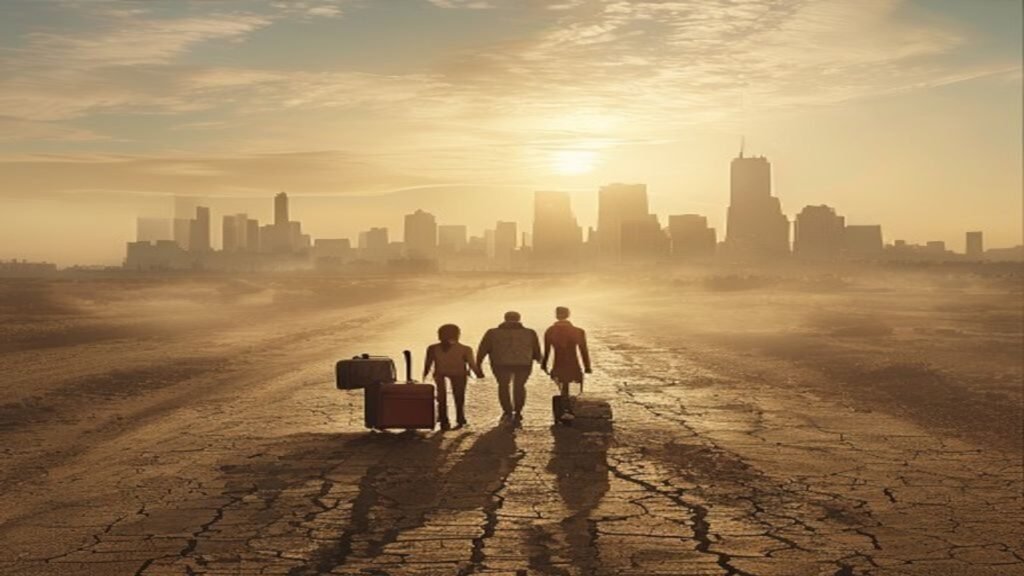
The largest migration of the twenty-first century is not crossing oceans in headlines — it is moving quietly, from countryside to city, from coastline to higher ground, one household at a time. Climate-driven displacement has become a defining force in global urbanization, and the cities absorbing the movement are being remade by it, in the developing world and the wealthy one alike.
The Scale of the Shift
International agencies estimate that weather-related disasters already displace tens of millions of people in a typical year — more than conflict in most years — and the World Bank has projected that without aggressive action, over two hundred million people could move within their own countries by mid-century for climate-related reasons. The overwhelming majority do not cross borders. They move to the nearest city that promises work, which is why the century’s climate story is inseparable from its urban story.
The Receiving Cities
In South Asia, Dhaka absorbs families displaced by riverbank erosion and salinity that ruins rice paddies; planners have championed a network of secondary “climate-resilient towns” to relieve pressure on a megacity already among the world’s densest. In Africa, coastal capitals from Lagos to Dakar juggle sea-level pressure on their own shores while receiving arrivals from drought-stressed interiors. Latin American cities absorb farmers leaving land where traditional growing calendars no longer hold. The pattern repeats: migration flows toward opportunity, and opportunity concentrates in cities that are themselves climate-exposed.
The American Version
Wealth changes the mechanics, not the phenomenon. In the United States, insurance markets are becoming the quiet engine of movement — as premiums soar and coverage retreats from wildfire and flood zones, household math shifts years before any mandatory retreat. Researchers track growing “climate abandonment” neighborhoods where flood risk drains population even as their metro areas grow. Meanwhile, a competing narrative has emerged around “climate haven” cities — Great Lakes metros like Duluth, Buffalo, and Ann Arbor marketing water abundance and mild summers to newcomers. The label is part aspiration, part real estate pitch, but the underlying flows are measurable and accelerating after each major disaster.
What Smart Cities Are Doing
The best-prepared receiving cities treat arrival as a design problem. That means upzoning for housing before scarcity becomes crisis; extending transit, water, and schools to absorb growth; and planning for the heat that migrants and natives alike will endure — cooling centers, shade infrastructure, and building codes written for the climate coming rather than the one departed. International development banks increasingly tie urban lending to such resilience planning, arguing that a dollar of preparation beats many dollars of emergency response.
The Choice Ahead
Migration researchers stress a crucial reframe: movement itself is adaptation. People relocating ahead of rising water are not policy failures; unplanned, unsupported movement is. The distinction will define whether the coming decades produce overwhelmed slums or successful new neighborhoods — whether receiving cities see arrivals as burdens or as the workforce and vitality that have always accompanied urban migration waves.
The world will add billions of urban residents this century regardless. Climate is now deciding where many of them go. The cities that plan for that arithmetic — in Bangladesh and in the Great Lakes alike — are writing the playbook for the urban century.