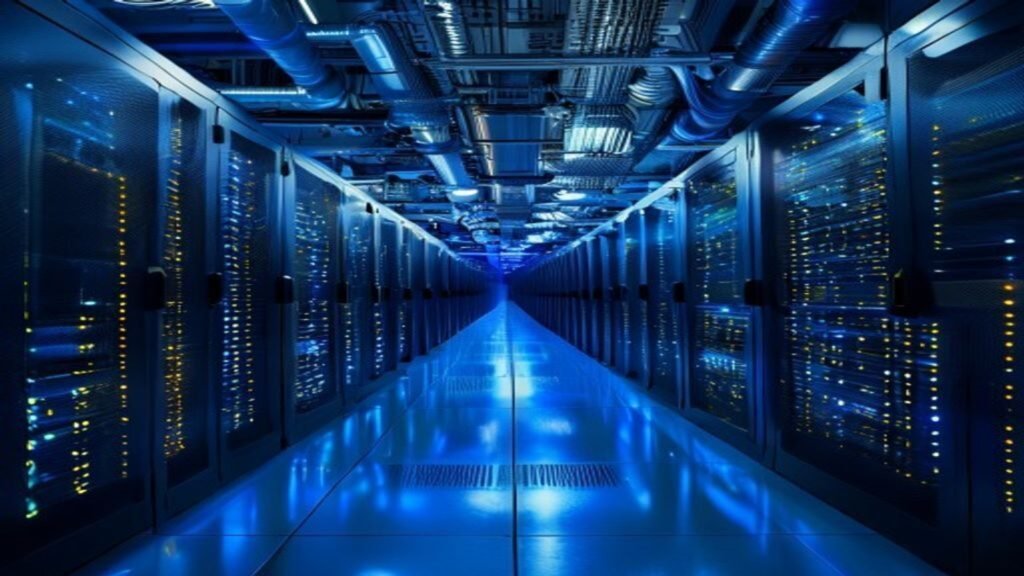
Artificial intelligence runs on mathematics, and mathematics runs on megawatts. The AI boom has translated into the largest surge in American electricity demand in a generation — data centers whose appetites are measured in the output of power plants — and the collision between silicon ambition and grid reality has become one of the defining infrastructure stories of the decade.
The Scale of the Surge
After two decades of essentially flat U.S. electricity demand, utilities are now planning for sustained growth, with data centers the leading driver. Federal energy analyses project data centers could consume a significantly larger share of national electricity by decade’s end, and the individual projects dwarf their predecessors: hyperscale AI campuses request hundreds of megawatts — sometimes gigawatts — apiece, comparable to steel mills or small cities. Northern Virginia, the world’s data center capital, became the cautionary tale, with transmission constraints slowing new connections and neighbors fighting substation sprawl; the boom has since scattered to Texas, Ohio, Georgia, Arizona, and anywhere with land, fiber, and — above all — available power.
The Nuclear Revival Nobody Predicted
Desperation for firm, carbon-free power produced the energy story of the era: big tech resurrecting nuclear. Landmark deals have included restarting shuttered reactors with their output contracted to data centers, record power-purchase agreements with existing plants, and a wave of investment in small modular reactor developers with tech companies as anchor customers. The hyperscalers — bound by public climate pledges even as their loads soar — have become the most aggressive corporate buyers of clean energy in history, layering nuclear deals atop massive solar, wind, and battery procurement and early geothermal bets.
Who Pays, and Who Waits
The crunch’s friction points are increasingly political. Utilities warn of multi-year interconnection queues; regulators wrestle with who funds the transmission lines and gas peakers that huge new loads require — with consumer advocates insisting ordinary ratepayers not subsidize trillion-dollar companies’ buildouts. Several states have created special large-load tariffs requiring data centers to guarantee payments regardless of usage. Communities weigh tax windfalls against water use, noise, and land conversion, and a visible backlash movement has produced moratoriums in some counties even as neighbors compete for the same projects.
Efficiency’s Counterattack
The demand curve is not destiny. Each chip generation delivers dramatically more computation per watt; cooling innovations — liquid, immersion, and free-air designs — squeeze overhead; and researchers race to make models cheaper to run, not just bigger. Flexibility may matter most: data centers that can shift or trim load during grid stress transform from problem to asset, and operators increasingly co-locate generation and storage on-site, arriving less as pure customers than as hybrid power players.
The Stakes
Optimists frame the crunch as the forcing function American energy needed — demand growth that finally finances grid modernization, transmission, and next-generation nuclear. Skeptics see rising bills and gas plants slipped in under an AI banner. Both agree on the core fact: the digital economy’s next chapter will be written by electricians, regulators, and reactor engineers as much as by programmers. Intelligence, it turns out, is an energy industry.