No commodity shapes twenty-first-century geopolitics quite like the semiconductor. The chips inside phones, cars, data centers, and missiles are produced by a supply chain so specialized that no nation on Earth controls it end to end — and that mutual dependence has turned technology trade into the sharpest arena of great-power competition. Welcome to the age of chip diplomacy.
A Supply Chain Built on Choke Points
The industry’s geography concentrates power in a handful of places. Taiwan fabricates the overwhelming majority of the world’s most advanced logic chips. South Korea dominates memory. The Netherlands is home to the only company producing the extreme-ultraviolet lithography machines that leading-edge fabs require. Japan supplies critical chemicals and wafers; the United States designs the chips and the software that designs the chips. Each node is a choke point — and every government has now noticed.
The Export Control Era
Washington’s response has been a lattice of export controls aimed at slowing rivals’ access to the most advanced computing — restrictions on cutting-edge chips, on the equipment that makes them, and on the engineers who service that equipment, coordinated with allies in Tokyo and The Hague. Beijing has answered with its own leverage, restricting exports of gallium, germanium, and rare-earth materials essential to electronics manufacturing, while pouring state capital into domestic chipmaking with a determination that has produced genuine, if uneven, progress. Analysts describe a technological iron curtain descending not with a single act but through accumulating rules — each round tighter, each response more creative.
Friendshoring and the Subsidy Race
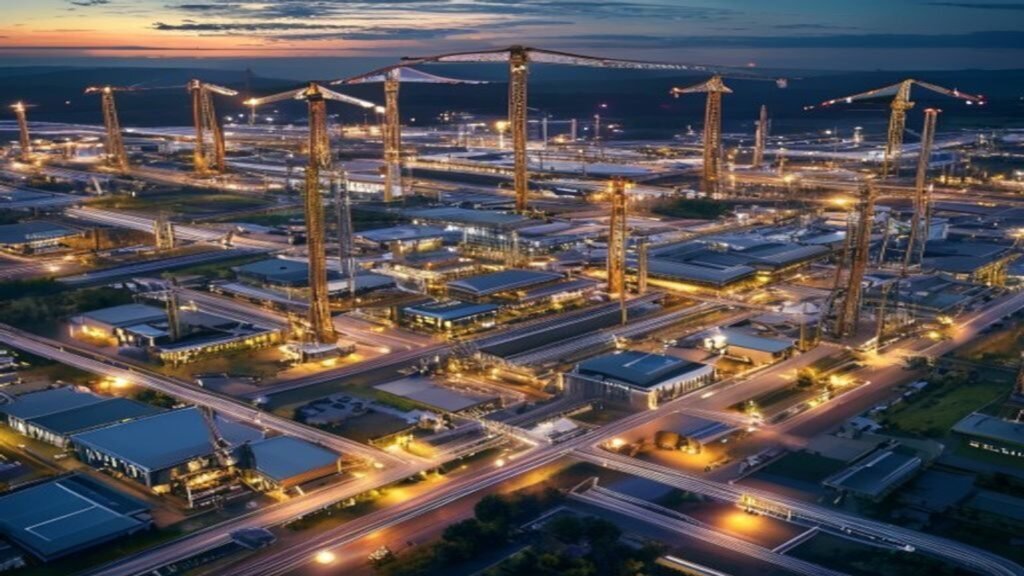
Parallel to the restrictions runs a construction boom. The United States, the European Union, Japan, and India have collectively committed hundreds of billions in subsidies to attract fabrication plants — a global “friendshoring” project intended to make democratic supply chains resilient against both coercion and catastrophe. Arizona, Ohio, Dresden, Kumamoto, and Gujarat now host projects that would have been unthinkable in the efficiency-obsessed era when everything migrated to the lowest-cost location. Economists debate the price tag of this insurance policy; strategists reply that the pandemic-era chip shortage, which idled auto plants worldwide, demonstrated what a single disruption costs.
The Taiwan Question
Hovering over everything is the island that makes the chips everyone needs. Taiwan’s semiconductor dominance functions as both shield and vulnerability — a “silicon shield” that gives the world a stake in peace, and a concentration risk that keeps defense planners awake. Every new fab built elsewhere subtly rebalances that equation, which is why Taipei watches the subsidy race with mixed feelings: diversification makes the world safer, and Taiwan’s leverage smaller.
What It Means for Everyone Else
For businesses and consumers, chip diplomacy translates into a quiet tax and a louder promise. Redundant supply chains cost more than optimized ones, and those costs eventually reach price tags. But the promise — that the digital economy’s foundation no longer rests on a single strait — is one governments across the political spectrum have decided is worth paying for. The chip was invented to make computing smaller. It has ended up making geopolitics larger, and the diplomacy around silicon now rivals the diplomacy around oil in the century past.