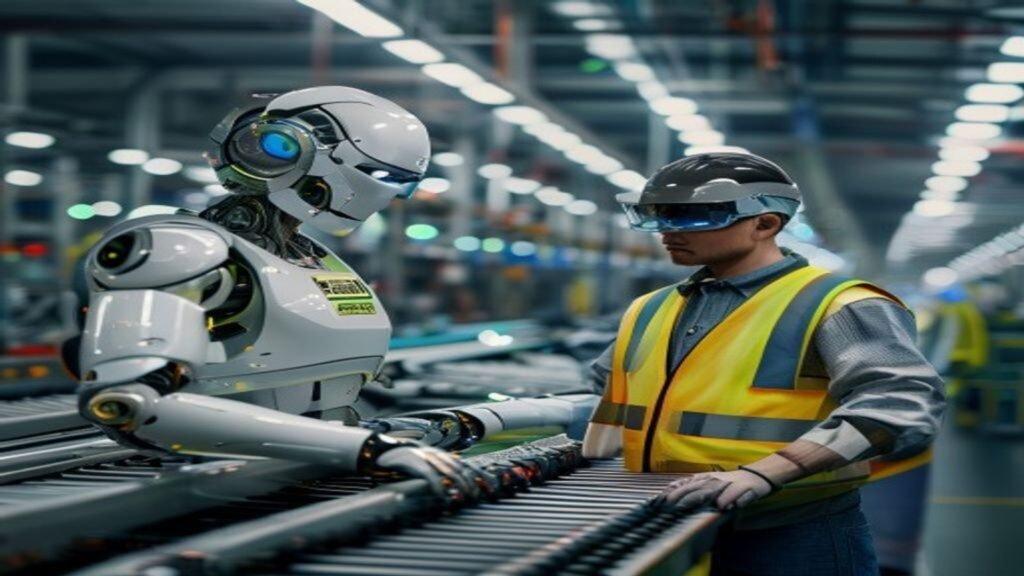
For decades the humanoid robot was a science-fair promise: spectacular on stage, useless on payroll. That era is ending. Bipedal machines from a crowded field of companies — Figure, Tesla, Agility Robotics, Boston Dynamics, Apptronik, and ambitious Chinese rivals among them — are now clocking supervised shifts in real warehouses and auto plants, moving totes, tending machines, and testing the proposition that the most flexible robot form is the one shaped like the workers it assists.
Why a Robot With Legs
The case for humanoids is the world itself. Factories, warehouses, and stores were built for human bodies — stairs, shelves at shoulder height, carts, door handles. Purpose-built automation dominates high-volume repetition, but re-engineering every facility is expensive; a machine that fits human spaces can, in theory, slot into existing workflows. The economics turn on labor arithmetic: warehousing and manufacturing report persistent shortages for grueling shift work, and robot makers pitch machines that lease for less than fully burdened wages while working around the clock.
What Changed in the Technology
Two revolutions converged. Hardware matured — electric actuators, cheaper sensors, and battery density gave robots useful strength and hours of runtime. But the deeper shift is intelligence: the same foundation-model techniques behind chatbots now train robot control, letting machines learn tasks from demonstration and video rather than months of hand-coding. Manufacturers describe teaching a new task in days, then distributing that skill across every robot in the fleet — a learning curve no human workforce can match. Simulation training, where robots practice millions of virtual repetitions before touching reality, has compressed development further.
The Reality Inside the Pilots
The trials themselves are deliberately unglamorous. In automotive plants, humanoids place parts and shuttle bins; in logistics facilities, they move totes between conveyors — structured, repetitive tasks where a fall or fumble costs little. Deployment counts remain in the hundreds, not thousands; uptime, speed, and cost-per-task still trail mature automation; and every robot works with human minders and generous safety buffers. Robotics veterans preach humility: the field’s history is littered with demos that never survived contact with a real loading dock. Yet the pilots keep expanding, and the customers footing the bills — automakers and logistics giants — are not sentimental buyers.
The Labor Question, Honestly
Unions and economists watch closely. Near-term, the machines target vacancies and injuries — the shifts operators struggle to staff and the lifting that wrecks backs. Longer-term, credible forecasts project millions of humanoids in industry by the 2030s if costs fall as projected, which would make the transition a defining labor story. The likely first-order effect mirrors past automation: tasks change before jobs vanish, with humans migrating toward exception-handling, maintenance, and supervision — and with the communities and workers least able to retrain bearing the sharpest risk.
The Verdict So Far
The honest summary: humanoids have crossed from impossible to merely unproven. The machines work; whether they work profitably, at scale, in the chaos of real industry is the trillion-dollar experiment now running in pilot programs across America and Asia. The robots have left the lab. The next few years decide whether they leave the pilot program.