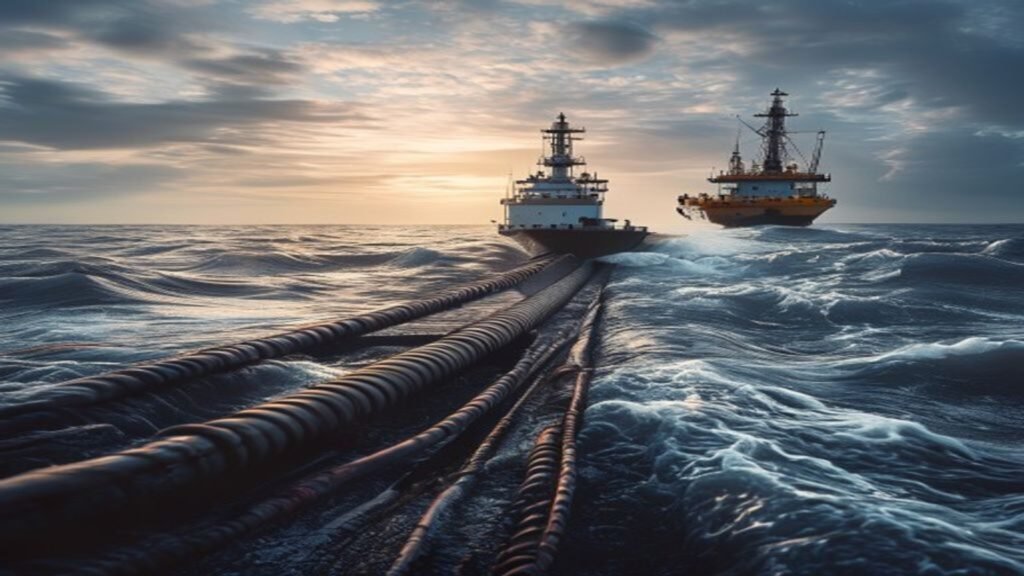
Nearly everything the modern world calls “the cloud” travels, at some point, through a garden hose-sized cable lying on the ocean floor. Undersea fiber-optic cables — a few hundred strands crossing the planet’s seabeds — carry the overwhelming majority of intercontinental internet traffic, underpinning trillions of dollars in daily financial flows. For decades they were infrastructure only engineers noticed. A series of high-profile incidents has changed that permanently.
Fragile by Nature, Targeted by Design?
Cables have always broken — anchors drag, fishing trawlers snag, undersea landslides sever. The industry logs scores of faults annually, and most are mundane. What has alarmed Western governments is the pattern of suspicious incidents in strategic waters: clustered breaks in the Baltic Sea, damaged links near contested chokepoints, and vessels of interest lingering over cable routes with transponders dark. Attribution is notoriously difficult at sea, which is precisely what makes cables attractive for gray-zone pressure — deniable, disruptive, and hard to deter.
The Repair Fleet Problem
The world’s response capacity is startlingly thin. Only a few dozen specialized repair ships exist globally, many decades old, and a single repair can take weeks — longer when permits, weather, or geopolitics interfere. Regions served by few cables feel breaks hardest: entire nations have been slowed to a crawl by simultaneous faults. Governments that once left everything to industry consortia are now subsidizing repair capacity, and NATO has stood up coordination cells to monitor critical undersea infrastructure, pairing navies with the private operators who actually fix the lines.
Big Tech Becomes a Cable Power
Ownership has transformed too. The traditional telecom consortia now share the seabed with technology giants — Google, Meta, Microsoft, and Amazon collectively bankroll a growing share of new transoceanic capacity, laying private cables to link their data centers. The buildout adds welcome redundancy and record capacity, while concentrating strategic infrastructure in a handful of corporate hands — a trade-off regulators on both sides of the Atlantic are still metabolizing. Routes themselves have become geopolitical: new projects increasingly detour around contested waters, and financing often follows alliance lines.
Building Resilience
The emerging playbook has three layers. Redundancy: more cables on more diverse paths, so no single cut isolates a region. Monitoring: acoustic sensing, satellite tracking of vessels near routes, and information-sharing between militaries and operators. And repair readiness: newer ships, pre-positioned spares, and streamlined permitting so a broken cable waits days, not months. Satellite constellations provide a partial backstop for critical traffic, but physics is stubborn — fiber on the seabed carries orders of magnitude more data than anything in orbit.
Why It Matters to Everyone
For ordinary users, the cable system’s genius is its invisibility; traffic reroutes around most faults before a video call stutters. The danger lies in the tail risks — coordinated cuts, chokepoint failures, repair backlogs — where invisibility becomes fragility. The internet was designed to survive the loss of any node. The seabed arteries that connect its continents were built for a friendlier ocean, and the work of hardening them has become one of the quiet security priorities of the decade.